 buddy90
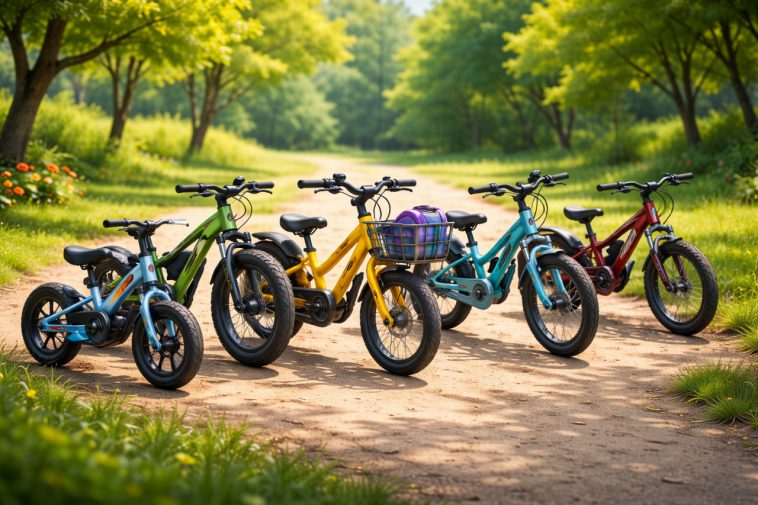
Electric bikes for kids are becoming increasingly popular as families look for fun, eco-friendly, and confidence-building ways to introduce children to cycling. Unlike adult eBikes, kids’ electric bikes are designed with lower speeds, lighter frames, enhanced safety features, and age-appropriate ergonomics.
Choosing the right eBike for a child is not just about fun—it’s about safety, control, and long-term riding habits. A well-designed kids’ eBike can help children develop balance, coordination, and road awareness while keeping rides enjoyable and manageable.
Below are the top 8 essential eBike product types for kids, covering different age groups, skill levels, and use cases.
Tips for Parents: Choosing an eBike for Kids
Before exploring specific product categories, it’s important to understand what makes a kids’ eBike safe and practical.
- Speed matters more than power: Most kids’ eBikes are limited to 8–20 km/h (5–12 mph), which is ideal for learning.
- Weight should stay low: A lighter bike is easier to control and safer if the child needs to stop suddenly.
- Adjustability is key: Seats, handlebars, and power modes should adapt as your child grows.
- Safety features are non-negotiable: Reliable brakes, speed limiters, and stable tires are essential.
With those principles in mind, here are the top eBike product categories for children in 2025.
1. Kids Balance eBike (Electric Balance Bike)
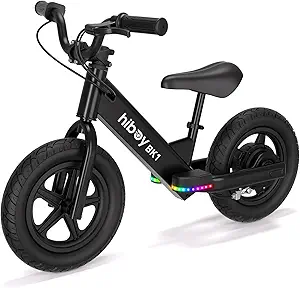
Electric balance bikes are designed for young children (ages 3–6) who are learning balance before pedaling. These bikes typically do not have pedals, allowing kids to focus on steering and stability while receiving gentle motor assistance.
Key Benefits:
- Builds balance and coordination early
- Extremely lightweight and low-speed
- Ideal transition to pedal bikes
Best For:
- First-time riders
- Toddlers and preschoolers
Most electric balance bikes use very small hub motors paired with low-capacity batteries to ensure smooth, predictable acceleration. Throttle response is intentionally gentle, often with delayed activation to prevent sudden starts. Many models include multiple speed modes that parents can switch manually, allowing gradual progression as confidence improves.
Frame geometry is typically low to the ground, making it easy for children to place both feet flat on the surface. This significantly reduces fear and improves control. Tires are often airless or low-pressure pneumatic tires to minimize maintenance and improve stability on sidewalks and park paths.
To buy this product on Amazon, click here.
2. Small-Wheel Pedal eBike (12–16 Inch)
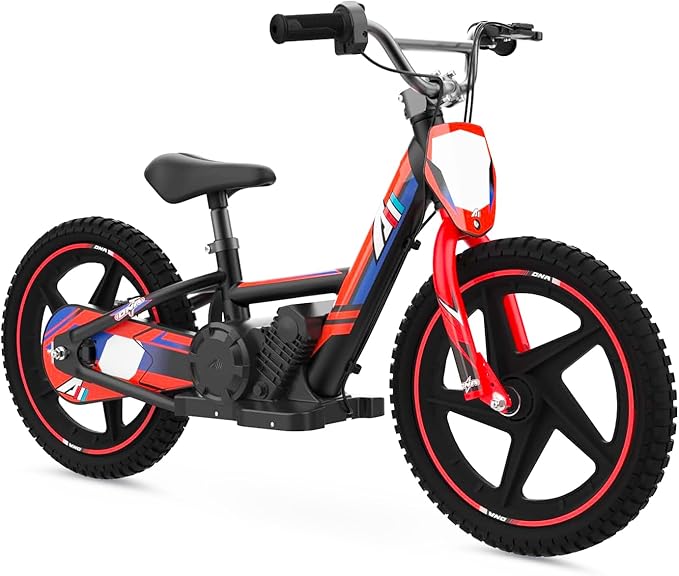
These compact pedal eBikes are perfect for ages 5–8, combining traditional pedaling with optional electric assist. Power is modest, and speed limits are carefully controlled.
Key Benefits:
- Encourages pedaling with support
- Child-sized geometry and controls
- Multiple assist levels
Best For:
- Kids transitioning from balance bikes
- Short neighborhood rides
Small-wheel pedal eBikes are often the first “real bike” experience for children. Most models use cadence-based pedal assist rather than throttles, encouraging active pedaling while still reducing fatigue. Motors are usually limited to low wattage, prioritizing smooth assistance over speed.
Brake levers are designed for small hands, often with shorter reach and lighter pull force. Many models include coaster brakes or combined braking systems to simplify learning. These bikes are ideal for supervised riding in residential areas or bike paths.
To buy this product on Amazon, click here.
3. Kids Fat-Tire eBike (Extra Stability Design)
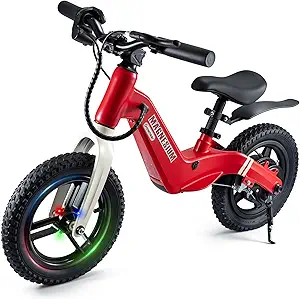
Fat-tire eBikes for kids feature oversized, low-pressure tires that dramatically improve balance, traction, and ride comfort. They are designed for children who benefit from extra stability or who ride on varied surfaces.
Key Benefits:
- Exceptional stability at low speeds
- Improved traction on sand, grass, and snow
- Confidence-building ride feel
Best For:
- Kids aged 7–11 needing extra balance support
- Mixed-terrain riding and playground paths
Fat tires absorb vibrations naturally, reducing the need for complex suspension systems. This makes the bike feel smoother and more forgiving on uneven ground while keeping the overall design simple and durable.
Despite their wider profile, kids’ fat-tire eBikes are carefully weight-balanced to prevent sluggish handling. Motor output remains modest, ensuring that added grip does not translate into unsafe speed.nce increases with age.
To buy this product on Amazon, click here.
4. Lightweight Aluminum Kids eBike
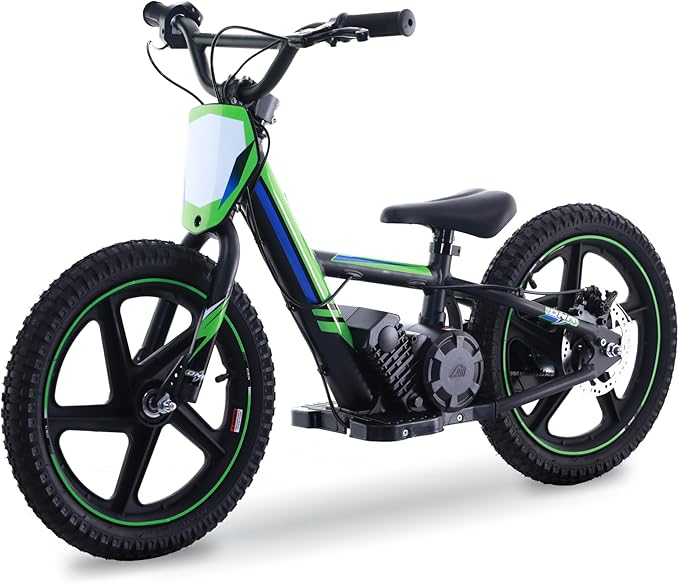
Weight is one of the most critical factors in kids’ eBikes. Aluminum-frame models reduce overall mass, making the bike easier to handle and safer during stops or falls.
Key Benefits:
- Easier control and maneuverability
- Less fatigue for young riders
- Safer handling
Best For:
- Smaller or less confident riders
- Urban and park riding
Lightweight aluminum frames are often paired with compact batteries and simplified drivetrains to keep total bike weight manageable. This is especially important when children need to push, lift, or reposition the bike themselves.
Lower weight also improves braking performance and reduces the risk of tipping during slow-speed maneuvers. These bikes are well-suited for flat terrain and everyday recreational use.
To buy this product on Amazon, click here.
5. Kids Off-Road / Trail eBike
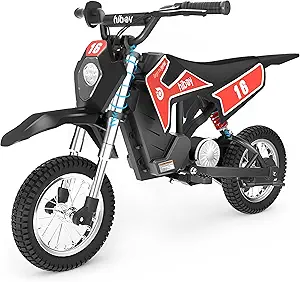
Designed for light off-road use, these eBikes feature wider tires, front suspension, and slightly more powerful motors—while still maintaining kid-safe speed limits.
Key Benefits:
- Handles dirt paths and trails
- Improved shock absorption
- Builds riding confidence
Best For:
- Active families
- Trail parks and outdoor adventures
Trail-oriented kids’ eBikes are built to handle uneven terrain while remaining predictable and safe. Suspension travel is usually limited to prevent excessive bounce, and tires prioritize grip over speed.
These bikes help children develop off-road skills such as weight shifting and terrain awareness. They are ideal for family rides on gravel paths, forest trails, or campground loops.
To buy this product on Amazon, click here.
6. Speed-Limited Training eBike
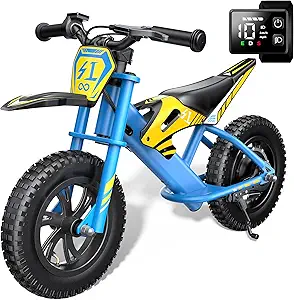
Training-focused eBikes include programmable speed caps and beginner modes that parents can control. Some models allow speed increases as skills improve.
Key Benefits:
- Parent-controlled safety
- Gradual skill development
- Reduced accident risk
Best For:
- Safety-first households
- New riders learning control
Many training eBikes feature removable keys, app-based controls, or physical limiters that allow parents to restrict speed and power output. This ensures that children cannot accidentally exceed safe limits.
These systems are especially useful during the first weeks of riding, allowing kids to build confidence without overwhelming acceleration or speed.
To buy this product on Amazon, click here.
7. Kids Mini-Cargo eBike (Storage + Commuting)
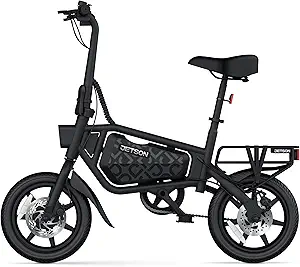
Mini-cargo eBikes for kids combine easy riding with small-capacity cargo areas (baskets or rear racks), encouraging responsibility and practical use.
Key Benefits:
- Built-in cargo space for backpacks or school gear
- Encourages utility-focused riding
- Strengthens balance with mild weight load
Best For:
- Trips to school or park
- Kids who carry gear regularly
Additional Details:
Cargo-style kids’ eBikes keep weight distribution low and centered, ensuring stability even with light loads. Baskets or carriers are designed to be secure and sized for children’s daily needs rather than heavy hauling.
These bikes help kids develop a sense of “purposeful riding” while retaining easy control and safe handling. Motors are typically mild, offering assistance primarily on gentle slopes or longer distances.
To buy this product on Amazon, click here.
8. Urban-Style Kids eBike (Everyday Riding)
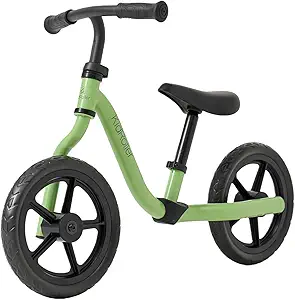
Urban kids’ eBikes focus on comfort, visibility, and practicality, often including lights, chain guards, and upright riding positions.
Key Benefits:
- Comfortable and practical
- Designed for daily use
- Improved visibility and control
Best For:
- Riding to school (where allowed)
- Family bike rides in the city
Urban designs emphasize predictability and ease of use. Upright geometry improves visibility in traffic, while accessories like integrated lights and reflectors enhance safety.
These bikes are ideal for short commutes, errands with parents, and regular daily riding, helping children see cycling as a practical mode of transport rather than just a toy.
To buy this product on Amazon, click here.
Comparative Table: Top 8 Kids’ eBikes
| Category / Model Type | Recommended Age | Primary Use Case | Key Strengths | Considerations |
|---|---|---|---|---|
| Kids Balance eBike | 3–6 | Learning balance & coordination | Lightweight, very easy to use, builds confidence | Limited range; no pedals |
| Small-Wheel Pedal eBike | 5–8 | Everyday neighborhood rides | Encourages pedaling + assist, child-sized controls | Smaller wheels may limit terrain |
| Kids Fat-Tire eBike | 7–11 | Mixed surfaces & low-speed stability | Excellent traction, great confidence booster | Slightly heavier due to tires |
| Lightweight Aluminum Kids eBike | 6–10 | Urban & park riding | Easy handling, good balance, low weight | Less suited for off-road terrain |
| Kids Off-Road / Trail eBike | 8–12 | Light trail & outdoor adventure | Front suspension and better grip | Limited suspension travel |
| Speed-Limited Training eBike | 6–12 | Learner safety & controlled riding | Parent-controlled speed limits | May feel underpowered for older kids |
| Kids Mini-Cargo eBike | 12–16 | Practical rides & carrying gear | Extra utility in school/park runs | Cargo load limited to light items |
| Urban-Style Kids eBike | 7–12 | City & daily riding | Upright comfort, safety features | Not optimized for rough paths |
How to Choose the Right Kids eBike
When selecting an eBike for a child, always consider:
- Child’s age, height, and confidence level
- Maximum speed and motor output
- Bike weight relative to the child
- Brake quality and tire grip
Always choose a model specifically designed for children—adult or “mini” eBikes are not appropriate substitutes.
Conclusion
Kids’ eBikes can be a powerful tool for building confidence, independence, and a love for cycling—when chosen correctly. From balance eBikes for toddlers to adjustable pedal-assist models for older kids, today’s market offers safe and well-designed options for every stage of development.
By selecting an age-appropriate, weight-conscious, and safety-focused eBike, parents can ensure that electric riding is not only fun—but responsible and rewarding.